Inside the Pure Water OEM Water Dispenser Project with Hidrosalud in Spain
A private-label water dispenser project rarely succeeds because of one feature or the lowest quotation.
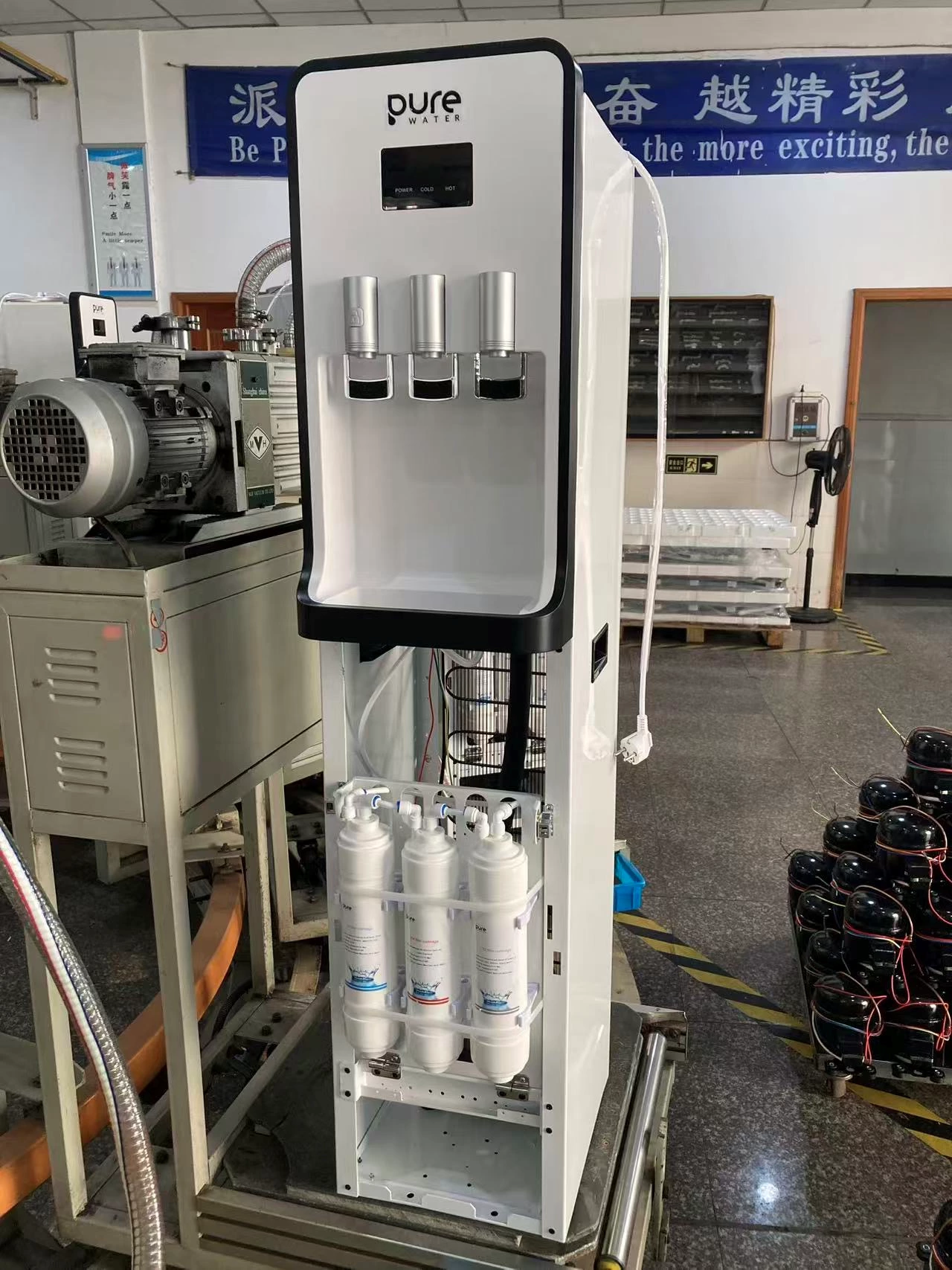
For Hidrosalud's Pure Water project in Spain, the process began in January 2025 with three sample models. After product evaluation, the SLR-766 floor-standing water dispenser was selected as the base platform. The first volume order then moved into a 40HQ container, followed by recurring production orders that now typically exceed 1,000 units per order.
The cooperation has continued as demand for the Pure Water line has grown.
What made the project work was not simply applying a logo to an existing machine. The selected platform had to fit the intended market, remain commercially competitive, allow practical engineering changes, perform consistently in mass production, and be delivered on a reliable schedule.
This case study explains how that process developed from sample evaluation to a repeat OEM program for the Spanish market.
Hidrosalud and the Culligan Context in Spain
Hidrosalud is an established Spanish water-treatment business. Culligan Spain publicly identifies Hidrosalud as one of the brands that now form part of its operations in Spain following the group's acquisition-led expansion in the country.
The project described in this article is Haibo's OEM cooperation with Hidrosalud for its Pure Water product line.
Culligan is referenced here only to provide the current public corporate context of Hidrosalud in Spain. The project should not be interpreted as a claim of a separate direct contract between Haibo and Culligan.
For an OEM manufacturer, this distinction matters. Long-term B2B cooperation is built on accurate product information and accurate business information as well.
The Project Started With Three Sample Models
The Pure Water project did not begin with a bulk purchase order.
Hidrosalud first ordered three different water dispenser samples for evaluation. This allowed the buyer to compare the products before committing to a larger private-label program.
After the samples were reviewed, the SLR-766 was selected as the preferred platform.
That sequence is typical of a serious OEM purchasing process: first confirm whether the product is right for the market, then confirm the technical and commercial details, and only then move into volume production.
For importers and private-label brands, sample evaluation is especially important when the product combines refrigeration, heating, filtration and several water-dispensing functions. A machine that looks suitable in a catalogue still needs to make sense in daily use, maintenance and long-term distribution.
Why the SLR-766 Was Selected
There was no single reason behind the final model decision.
The SLR-766 offered a combination that fitted Hidrosalud's intended positioning in Spain.
A 1,250 mm Floor-Standing Product Platform
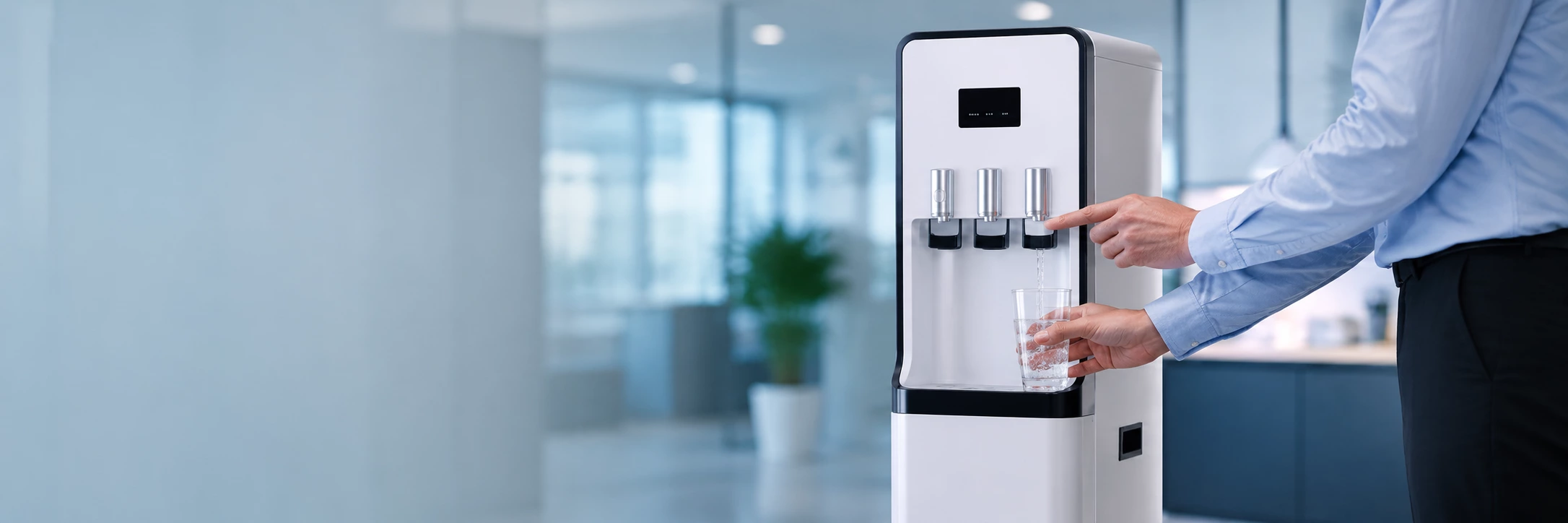
The product has a 1,250 mm cabinet height, giving it the taller proportions Hidrosalud wanted for the selected floor-standing range.
Product height can look like a minor specification on a quotation sheet, but for distributors it influences visual positioning, user interaction and how the machine fits alongside competing products already established in the market.
A Design Direction Suited to the Target Market
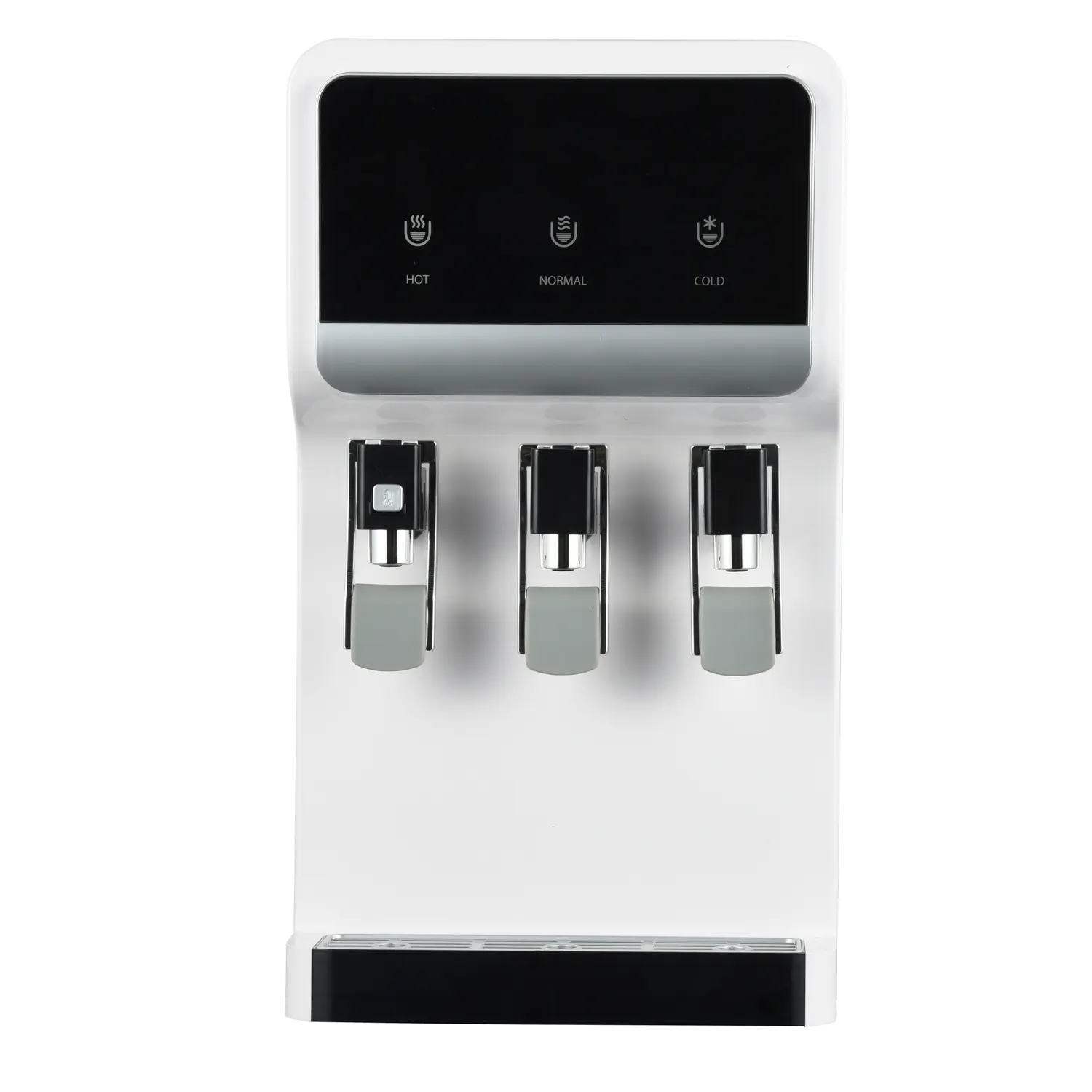
The rounded cabinet, clean black-and-white appearance and three-outlet front layout were closer to the visual direction required for the project.
Instead of developing a new enclosure from the beginning, the project could start from an existing production-ready platform and concentrate development work on the details that mattered commercially.
Straightforward Mechanical Construction
The relatively simple mechanical layout was another advantage.
For a distributor responsible for products after they enter the market, unnecessary complexity can increase maintenance difficulty and create additional potential failure points. A straightforward internal structure also makes service work and component replacement easier for local technical teams.
Hot, Ambient and Cold Water
The three independent dispensing functions provide hot, ambient and cold water, an important requirement for the Pure Water product.
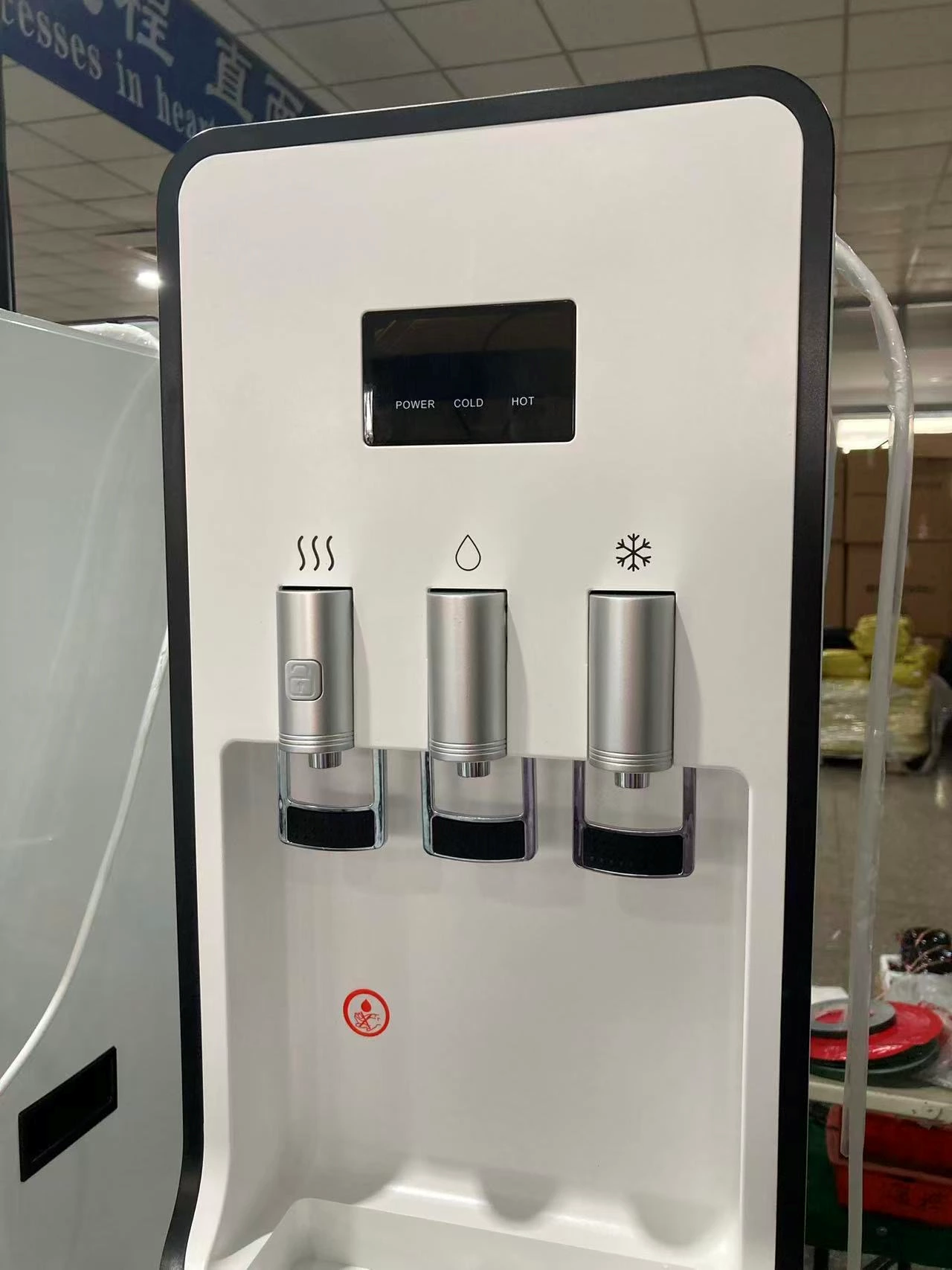
The interface was later adapted further so that the three temperatures could be identified immediately by the end user.
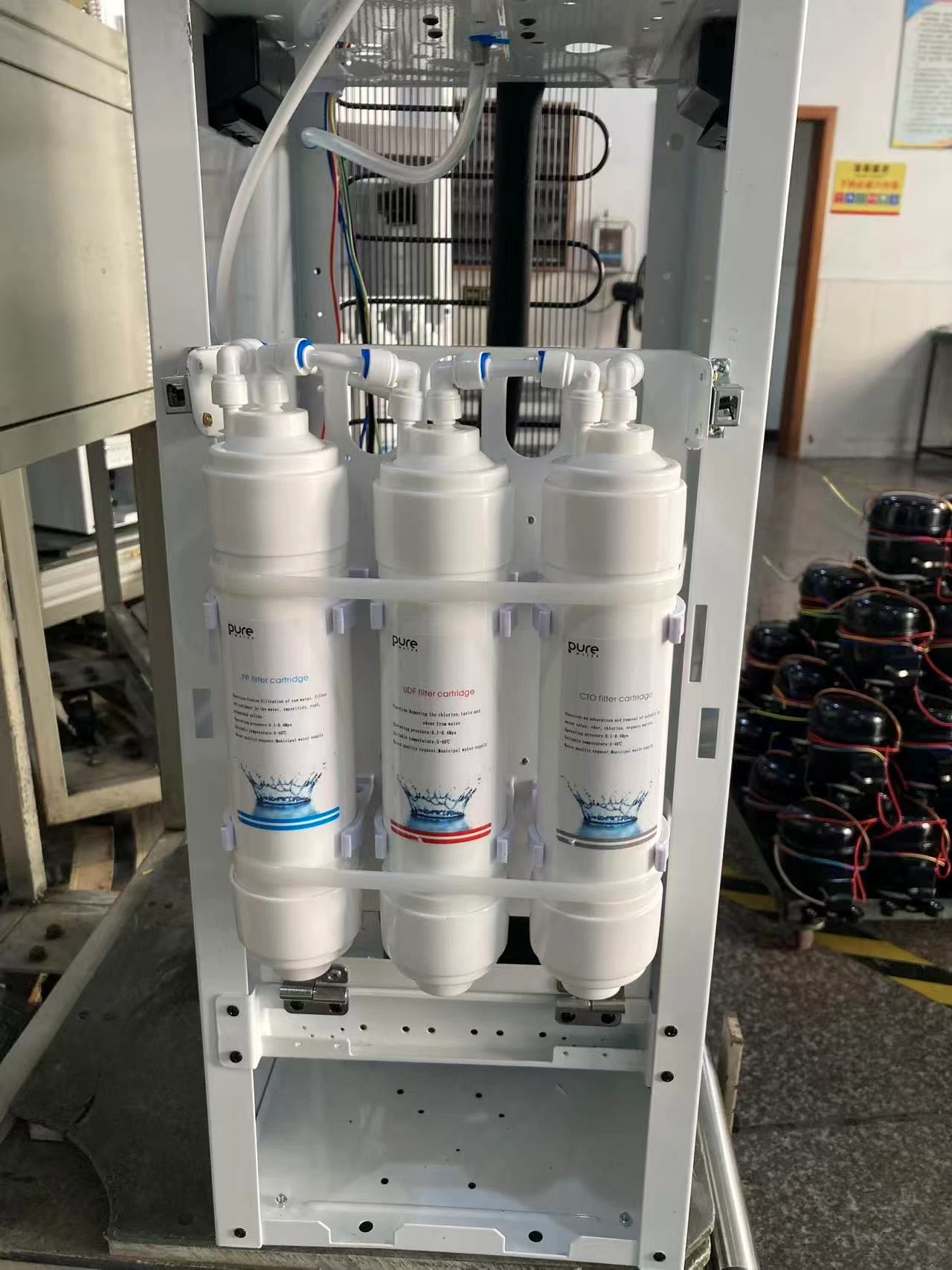
Flexible Filtration Configuration
The filtration area could be adapted according to the requirements of the Pure Water project rather than forcing the customer to accept a completely fixed water-treatment layout.
For an OEM buyer, this flexibility is important because filtration requirements can change according to water source, target performance, maintenance strategy and product positioning.
Commercial Competitiveness
The final factor was price.
Product design, engineering support and manufacturing stability are important, but an OEM program still has to work commercially in the destination market.
The SLR-766 offered Hidrosalud a practical balance between product positioning, configuration flexibility, manufacturing simplicity and a competitive purchase cost.
That balance ultimately mattered more than any individual specification.
Turning a Standard Water Dispenser Into the Pure Water Configuration
Once the base model had been selected, the next stage was not simply adding the Pure Water logo.
Several product details were adjusted according to Hidrosalud's requirements for the Spanish market.
Heating System Changed to an External Configuration


One of the more substantial technical changes involved the hot-water system.
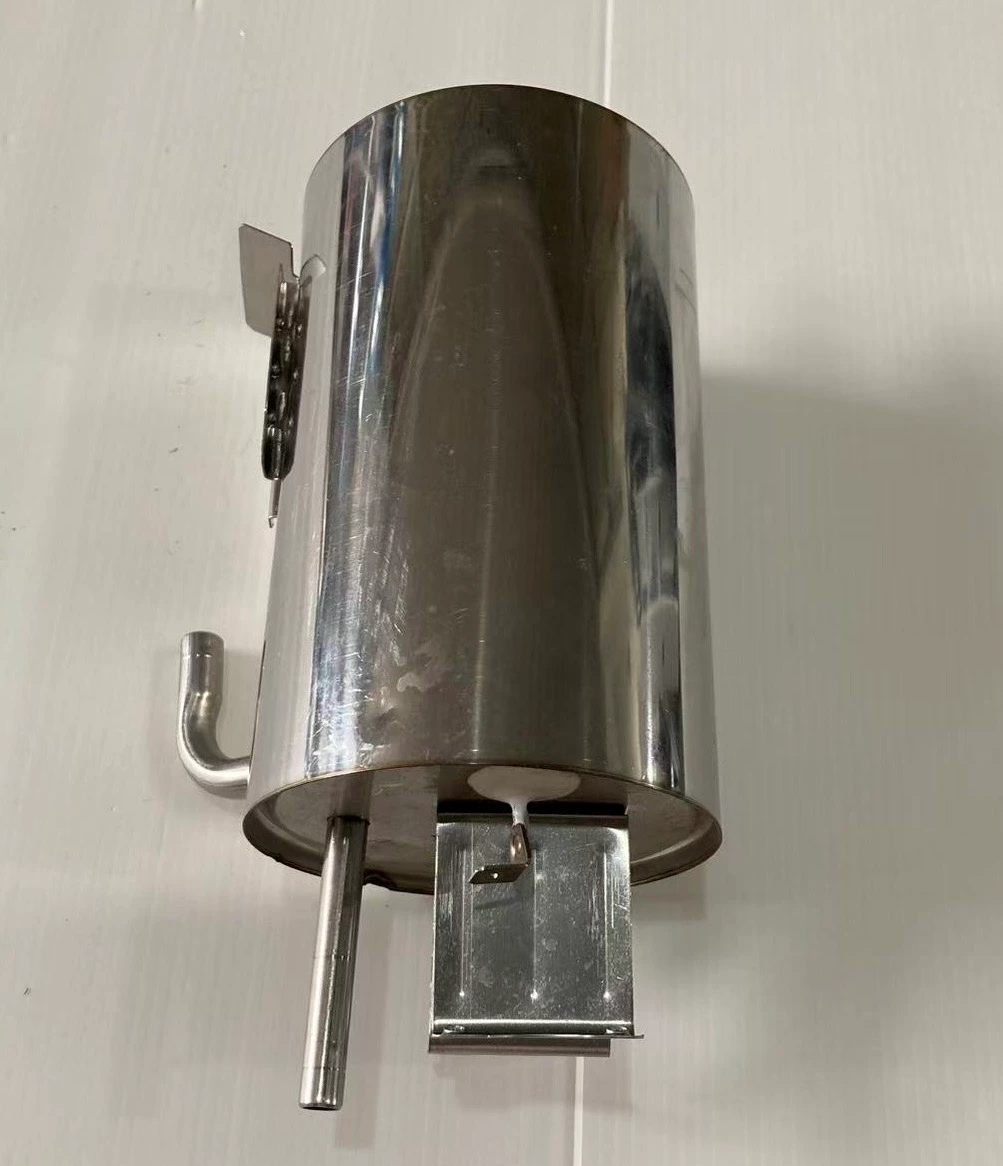
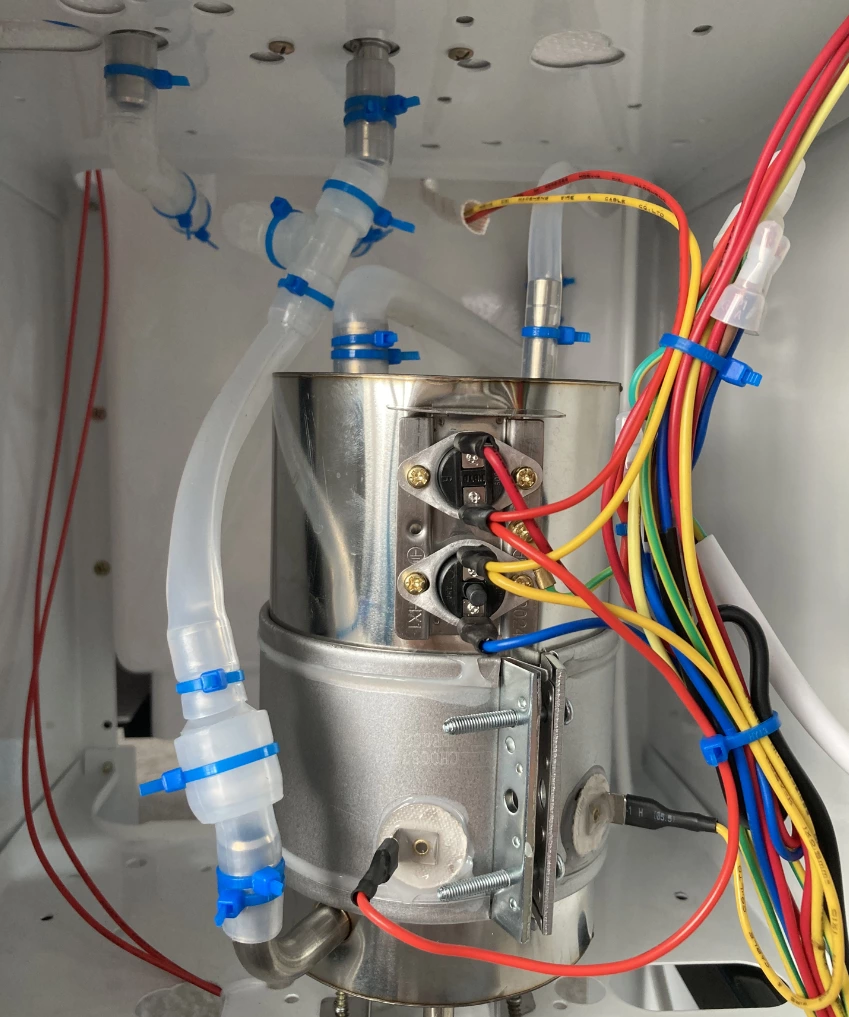
The original internal immersion-heating arrangement was changed to an external heating configuration according to the customer's requirement.
This type of change is different from artwork customization. It affects an actual functional part of the product and therefore has to be confirmed at component, assembly and production level before repeat manufacturing.
Dedicated Hot, Ambient and Cold Water Markings

Hidrosalud requested clear visual identification for each dispensing temperature.
Separate symbols were therefore added above the three outlets for:
Hot — Ambient — Cold
It is a small detail from an engineering perspective, but an important one for the finished product. Market-specific OEM work often consists of precisely these changes: not redesigning an entire machine, but adjusting the product so it feels intentional when it reaches the end user.
Spanish-Language Printed Materials
Printed materials were prepared in Spanish according to the project requirements.
Language customization can include user manuals, product information, labels, packaging text and other market-facing materials depending on the confirmed order.
For private-label brands, these items should be treated as part of the product specification rather than something added after production is finished.
Pure Water Branding Beyond the Front Logo

Private-label implementation was also extended beyond the visible product logo.
Pure Water branding was applied to project-specific elements including the filtration components and export packaging.
This is important because a mature private-label program requires consistency across the product, consumables, printed materials and carton rather than a logo appearing only on the front panel.
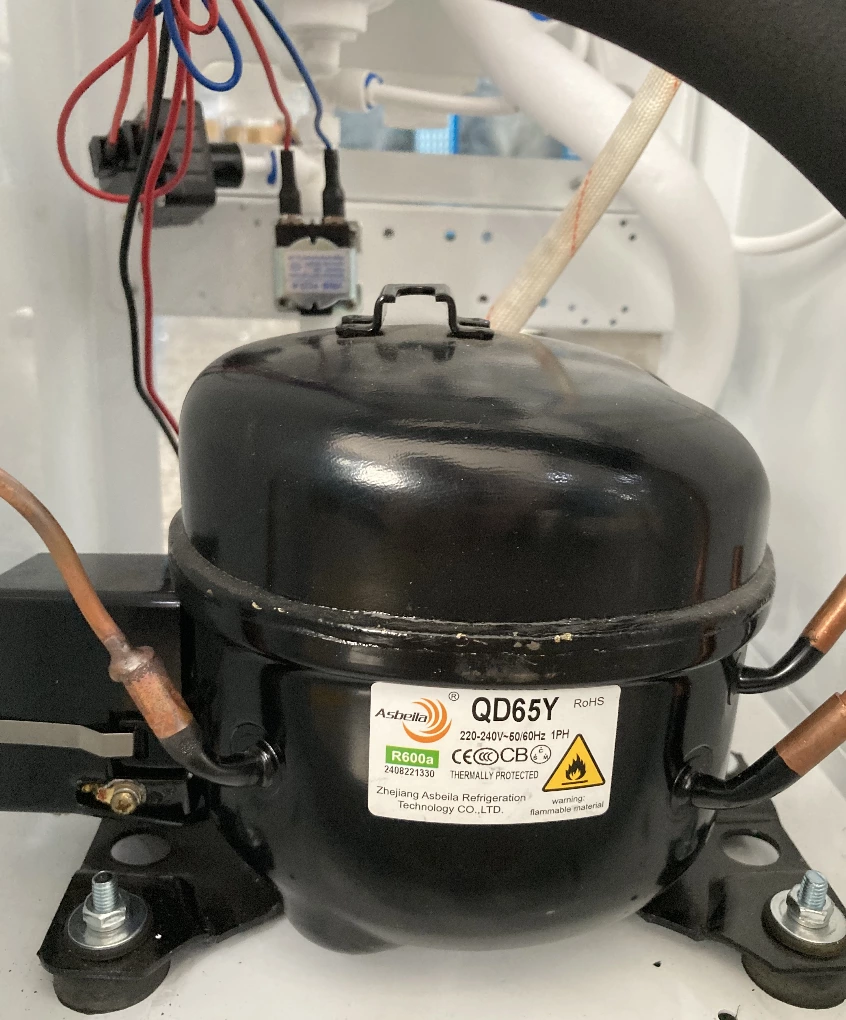
European-Market Cooling Configuration With R600a

The refrigeration configuration was also adapted for the project.
The selected compressor system uses R600a refrigerant for the European-market version.
Changes involving the refrigeration system have wider implications than changing an exterior panel. Compressor selection, refrigerant type, cooling performance, electrical configuration and the applicable compliance scope must be considered together.
For this project, the relevant compliance documentation was aligned with the confirmed European-market configuration, including the applicable CE conformity documentation and related EMC/LVD and CB records for the relevant model and specification.
Detailed certification files are handled during project qualification and are not reproduced in this case study.
From the First 40HQ Order to Recurring Volume Production

After sample evaluation and configuration confirmation, Hidrosalud placed the first 40HQ production order for the selected model.
That was the point at which the project changed from product development into a repeatable manufacturing program.
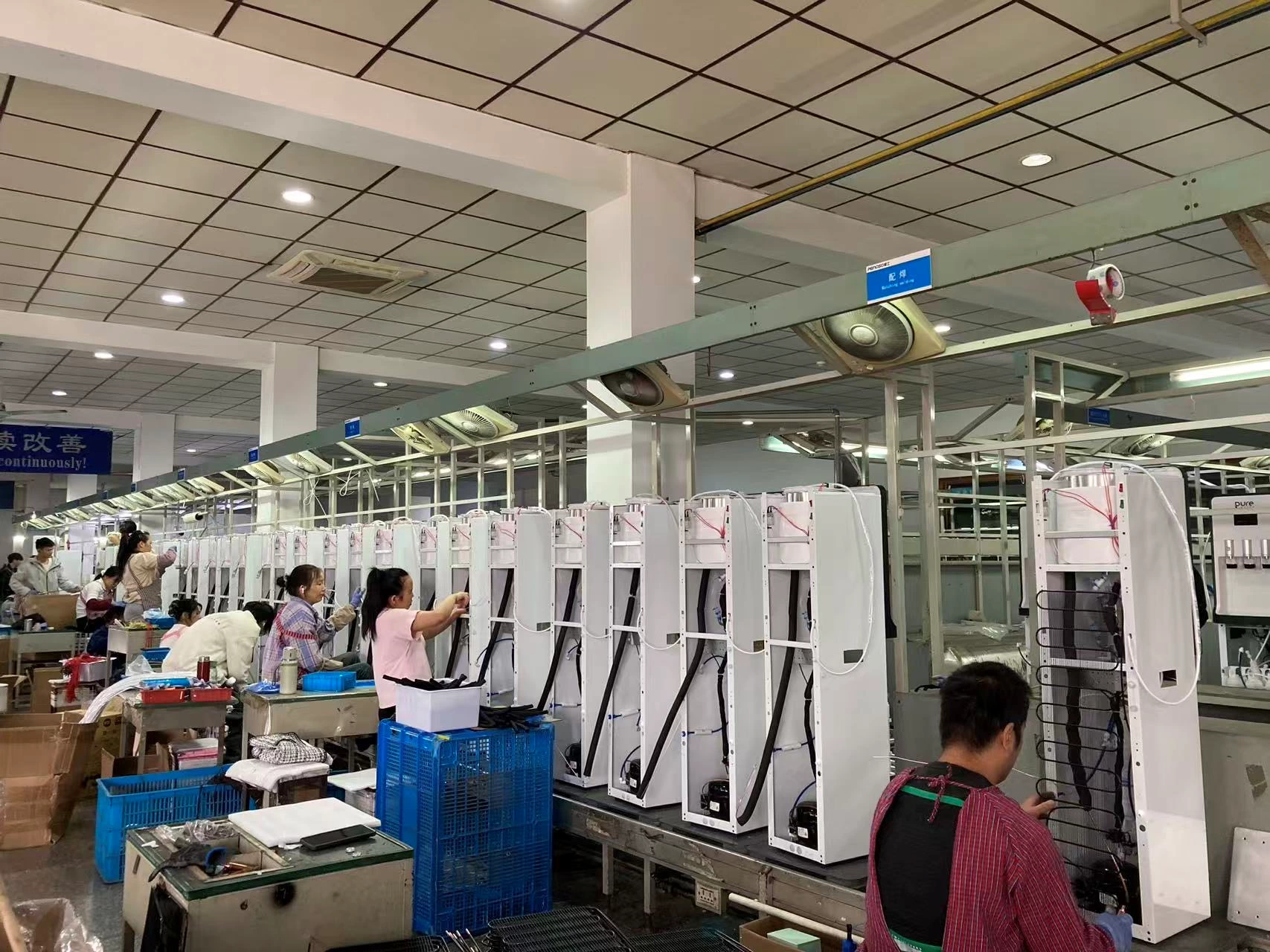
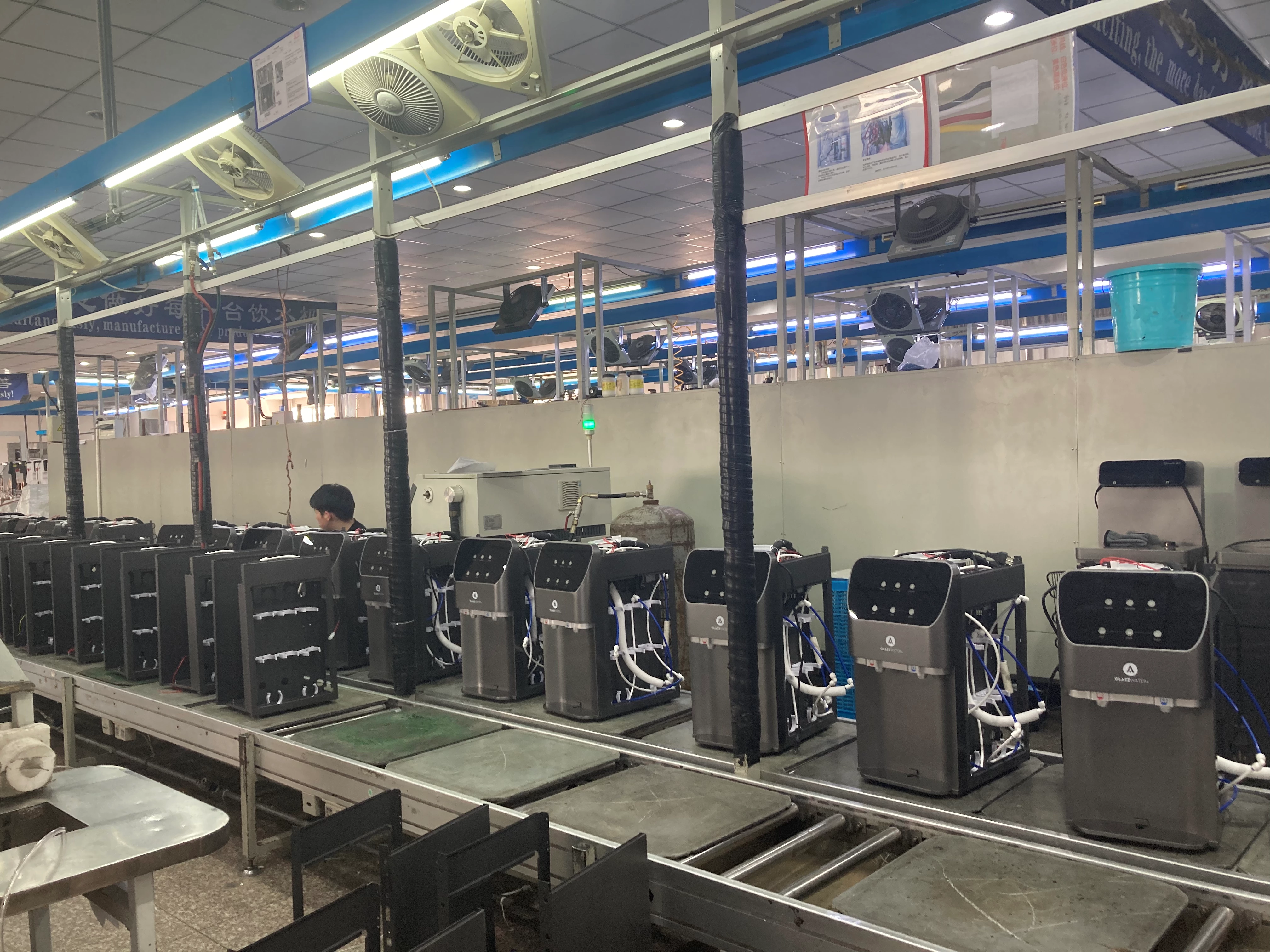
A supplier can make one good sample. The more difficult task is reproducing the same approved product when hundreds or thousands of units move through production.
That requires control over the confirmed components, filtration arrangement, heating and cooling system, branding, printed materials, packaging and final product appearance.
As cooperation continued, repeat production orders grew in scale.
Individual repeat orders now typically exceed 1,000 units per order, while demand for the product has continued to increase.
We deliberately do not publish cumulative purchase volumes, prices or the customer's internal purchasing forecast. For a B2B case study, the important point is not the customer's confidential commercial data. It is that the product moved from sample evaluation into repeated volume production.
Keeping Quality and Delivery Consistent Across Repeat Orders
The first bulk order is only one test of an OEM supplier.
Repeat orders create a different requirement: the approved product must remain consistent from one batch to the next.
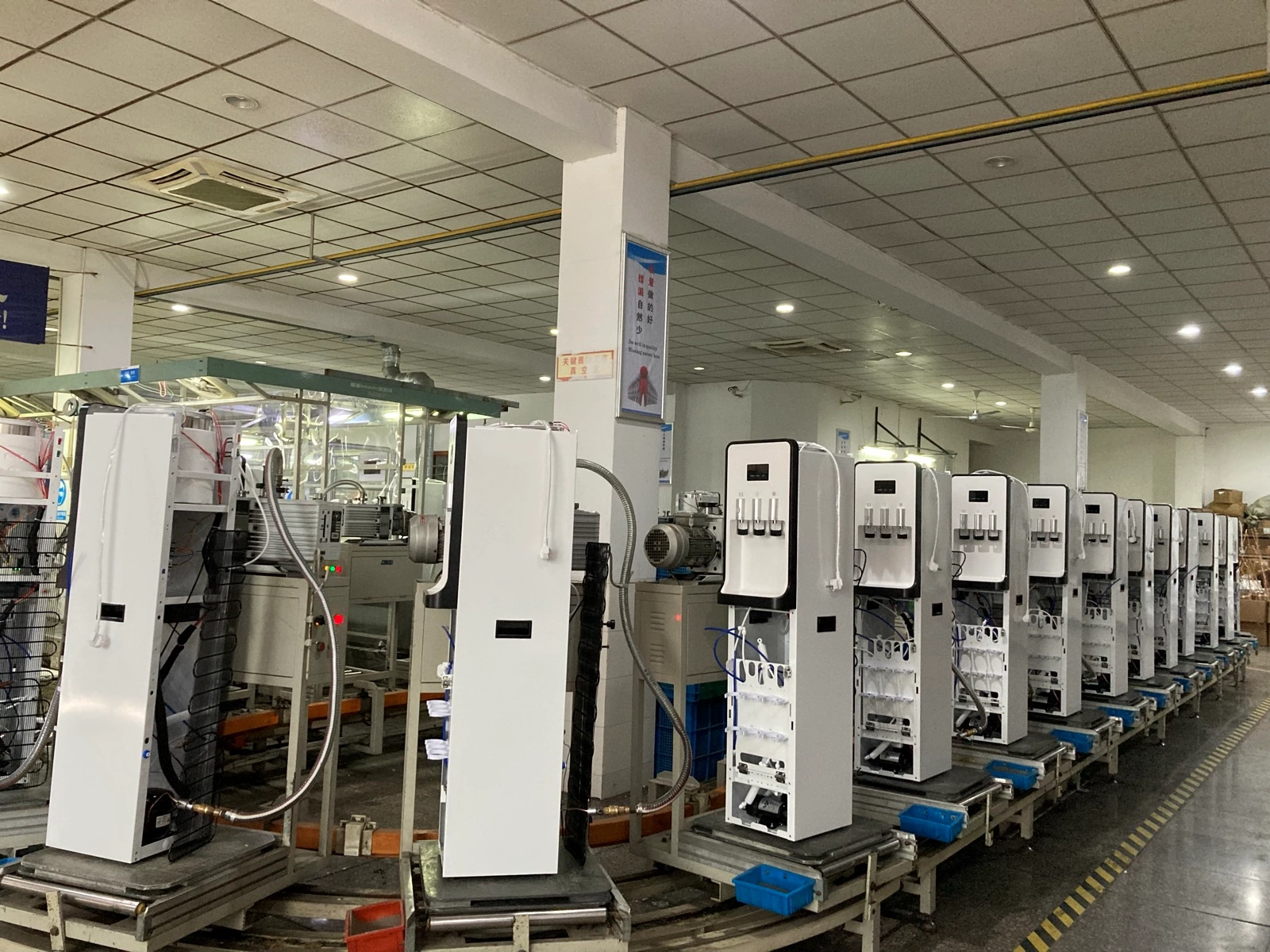
For the Pure Water project, production control covers the main stages required for a compressor-cooled, filtration-equipped water dispenser, including component preparation, assembly, water-system connections, heating and refrigeration components, functional checks, final inspection and packaging preparation.
The objective is practical: the next production batch should not become a different product from the one the customer originally approved.
Delivery reliability is equally important.
For distributors operating their own inventory and sales network, an unstable production schedule can create problems even when the machine itself performs well. Stock shortages, delayed promotions and unpredictable replenishment all affect the customer after the factory has finished production.
Stable quality and stable lead times therefore became an important part of the continuing cooperation, not simply supporting services around the product.
Private-Label Packaging and Export Preparation
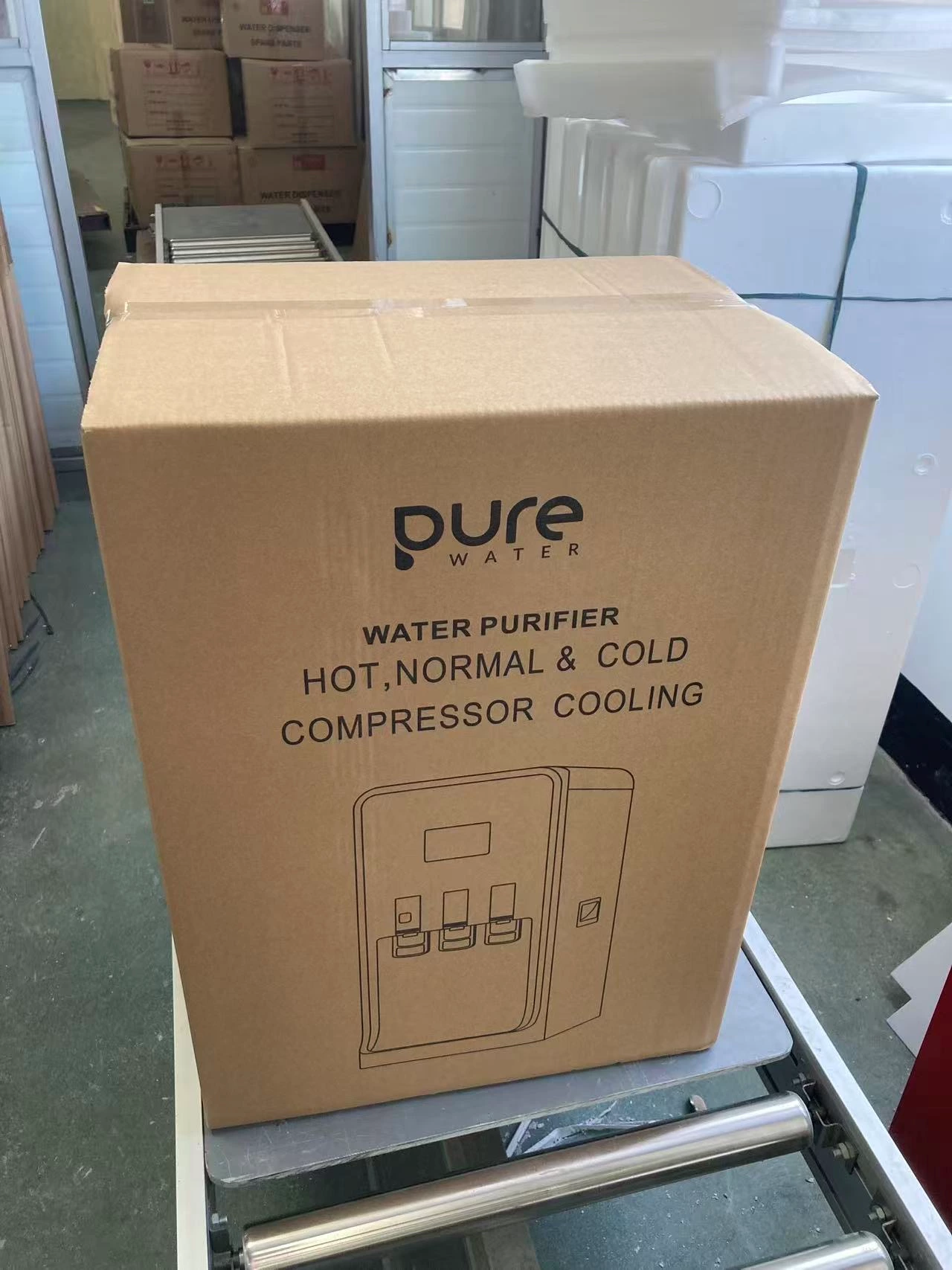
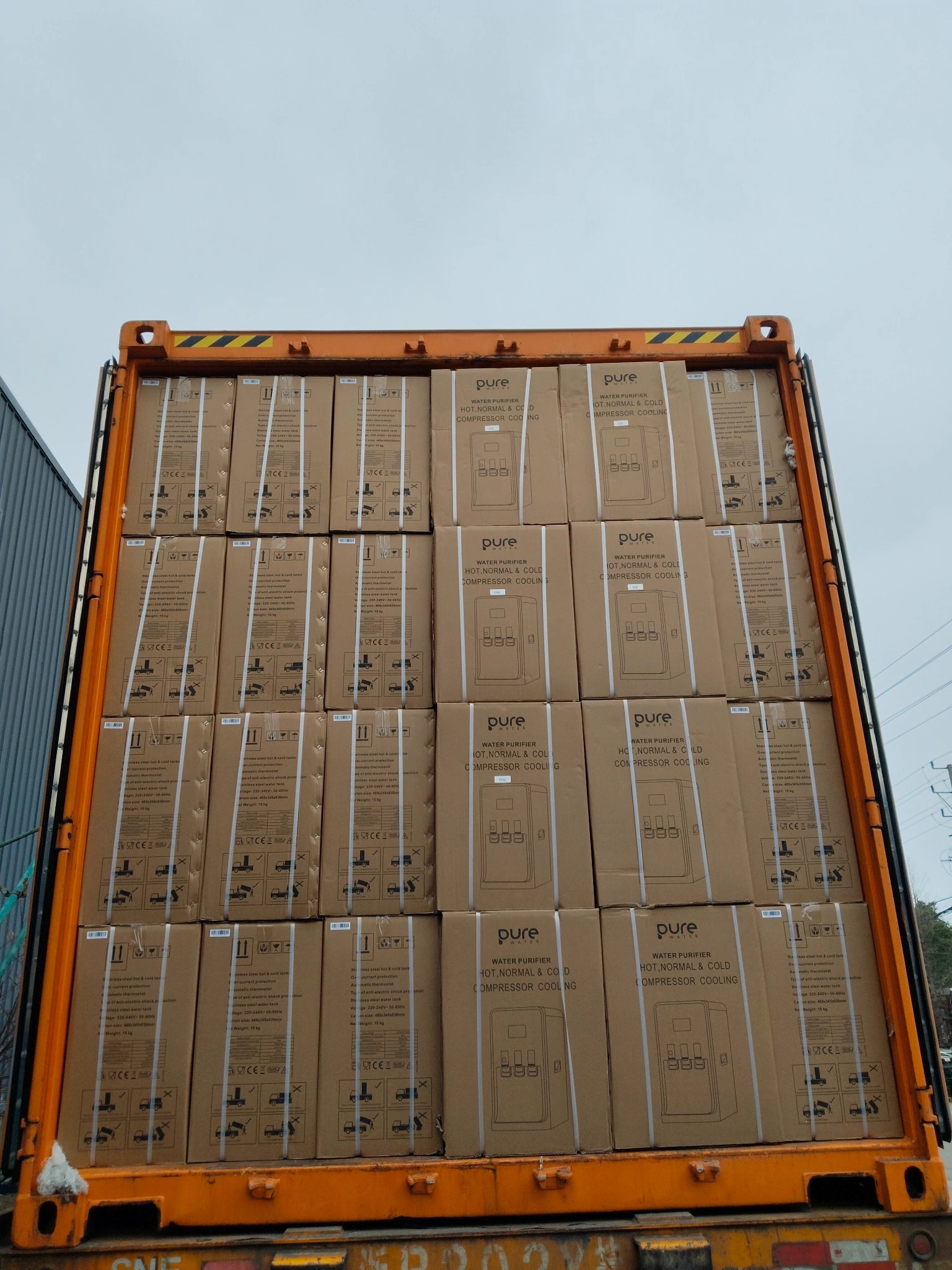
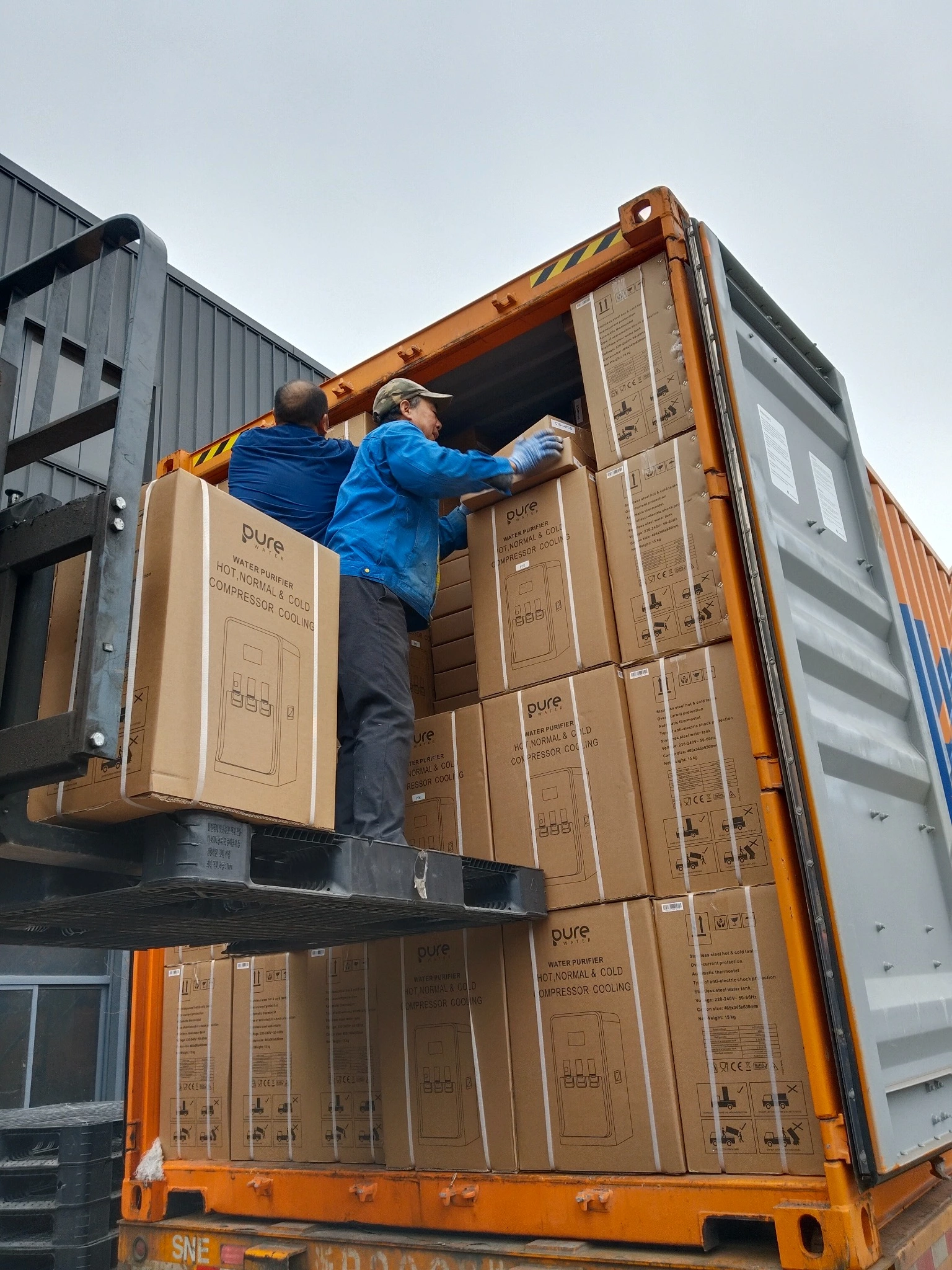
The finished Pure Water units are packed in project-specific cartons carrying the Pure Water branding, product description and handling information.
For international OEM orders, packaging serves several functions at once.
It protects the machine during transport, identifies the private-label product, carries required information and makes warehouse handling easier after arrival.
Once finished products pass final preparation, packed units are organized for container loading and export.
The Pure Water project has progressed through repeated container shipments, with production batches prepared for shipment to the Spanish market.


The loading photographs in this case study show the same branded cartons moving from finished production into a full container shipment. That connection between product, packaging and shipment is more useful to a professional buyer than a generic photograph of a warehouse.
Pure Water in the Spanish Market
The Pure Water line is now publicly visible through Spanish water-treatment and distribution channels.
Spanish distributors present Pure Water as a Hidrosalud water-purification range for residential and business applications, with floor-standing and countertop formats and three-temperature dispensing.
This public market presence provides an independent point of reference beyond the manufacturing photographs shown in this case study.
For a prospective OEM buyer researching a supplier, that type of cross-check can be useful:
the branded product can be seen during production in China, the same private-label identity appears on export packaging and container shipments, and the Pure Water range can also be found in its destination market in Spain.
The project is therefore not a concept rendering or a one-off branded sample. It is a product program that has moved through sampling, production, export and ongoing commercial distribution.
Growing Demand Has Changed the Relationship
The cooperation began with one product-selection project.
It has since developed into recurring volume orders, and discussions are now underway regarding additional product opportunities.
That changes the nature of the supplier relationship.
When a distributor invests in a product line, the supplier has to think beyond the next purchase order. Product continuity, replacement components, future configurations, channel positioning and new-product planning become increasingly important.
We also treat established distribution relationships carefully when evaluating opportunities in the same market. Long-term cooperation works better when the supplier understands that protecting a partner's market position can be more valuable than maximizing every possible short-term sale.
For us, that is an important distinction between simply exporting machines and supporting a durable OEM program.
What This Project Tells Buyers About Selecting an OEM Water Dispenser Supplier
The Pure Water project is one practical example of a broader supplier-selection principle.
Price matters. It mattered in this project as well.
But price works only when the product is appropriate for the target market and when the supplier can continue reproducing the agreed specification after the first order.
A buyer evaluating an OEM water dispenser manufacturer should therefore look at the complete system:
product fit, technical adaptability, mass-production consistency, quality control, lead-time reliability, private-label execution, export preparation and after-sales support.
Those are the same areas covered in our guide on How to Choose a Reliable OEM Water Dispenser Manufacturer in China.
The difference is that this case shows how those criteria appear in a real project.
Three samples were evaluated.
One platform was selected.
The product was adjusted for the target market.
The first 40HQ order entered production.
The approved configuration moved into recurring orders of more than 1,000 units at a time.
And the cooperation continues to develop.
That is ultimately the test of an OEM platform: not whether the first sample looks good, but whether the product can keep working commercially and operationally after the first container has left the factory.
Buyer FAQ
Is Hidrosalud part of Culligan in Spain?
Yes. Culligan Spain publicly identifies Hidrosalud as one of the established brands that now form part of its operations in Spain following Culligan's acquisition-led expansion in the country.
Is this a direct Culligan OEM project?
This case study documents Haibo's OEM cooperation with Hidrosalud for the Pure Water product line.
Culligan is referenced because Hidrosalud is publicly identified as part of Culligan's operations in Spain. We do not present this project as a separate direct contract between Haibo and Culligan.
What model was selected for the Pure Water project?
Hidrosalud evaluated three sample models before selecting the SLR-766 floor-standing water dispenser as the main platform for the project.
Why was the SLR-766 selected?
The decision was based on a combination of the 1,250 mm product height, market-appropriate appearance, straightforward mechanical construction, stable hot/ambient/cold dispensing, flexible filtration configuration and competitive commercial positioning.
What was customized for the Spanish market?
Project changes included Pure Water branding, filtration configuration, temperature identification graphics, Spanish-language printed materials, private-label packaging, an external heating configuration and an R600a refrigeration configuration for the selected European-market version.
Did the project move into mass production?
Yes. After the sample-selection stage, the project moved into its first 40HQ order. Cooperation has continued through recurring volume orders, with individual repeat orders now typically exceeding 1,000 units.
Can similar private-label water dispensers be developed for other markets?
Yes, but the correct configuration should be reviewed according to the target market, water source, required dispensing functions, filtration, electrical specification, compliance requirements, branding, order volume and target price.
Existing production-ready platforms can often provide a faster route to market, while deeper changes may require additional engineering and validation.
Planning a Private-Label Water Dispenser Project?
If you are an importer, distributor or water-treatment brand evaluating an OEM water dispenser for Europe or another international market, start with the project requirements rather than a generic catalogue request.
Share your:
- target market and sales channel
- countertop or floor-standing preference
- hot / ambient / cold requirements
- RO, UF or other filtration requirements
- voltage and plug specification
- expected order volume
- target price level
- branding and packaging requirements
- required compliance documentation
Haibo can review the requirement against existing production platforms and recommend a practical route for sampling, customization and volume production.